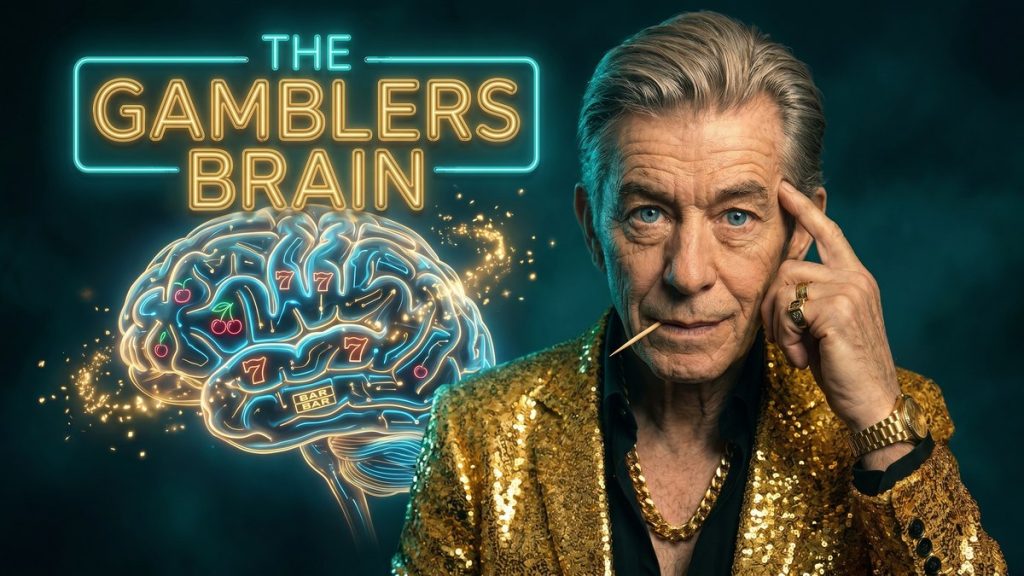
The Psychology of Gambling: Why Your Brain Loves to Play
🕑 9 min read
Last updated: June 2026
Last verified 3 months ago (9 June 2026)Gambling hooks the human brain on purpose, friend, and once you understand how, the spell loses half its power. It runs on dopamine, the chemistry of anticipation. It uses the same unpredictable-reward trickery that makes a slot machine as compelling as a habit you can’t shake. It exploits the near-miss, the illusion of control, and the urge to chase losses. Here’s the real science of why your brain loves to play, explained plainly, and why knowing it is the best protection you’ve got.
I watched the human brain at the gambling table for fifty years before I ever read a word of the science, friend, and when the researchers finally explained it, I just nodded. They’d put names to everything I’d seen on a thousand faces. Gambling isn’t compelling by accident. It pushes the oldest buttons in your head, the ones you can’t simply switch off. So let me show you those buttons, because a button you can see is a button you can resist.
Dopamine: it’s the chase, not the win
Start with the chemistry. When you gamble, your brain releases dopamine, the feel-good chemical tied to reward and motivation. But here’s the crucial twist science discovered: the biggest dopamine hit doesn’t come when you win. It comes in the anticipation, the moment the reels are spinning, the ball is rolling, the card is about to turn. The wanting, not the having.
That’s why the chase feels so good even when you’re losing money. Your brain is getting its reward from the hope itself, dosing you with dopamine on every single bet, win or lose. It’s the same machinery that drives all sorts of compulsions. The casino isn’t really selling you winning. It’s selling you that delicious, repeatable instant of about to win, and your own brain pays for it gladly.
The science of “maybe”
Now the most important idea in the whole field. Psychologists call it variable-ratio reinforcement, and it’s the single most powerful way to lock in a behaviour. The rule is simple and ruthless: a reward that comes at random, unpredictable intervals is far more compelling than one that comes reliably. Not knowing when the next win lands is exactly what keeps you pulling.
A slot machine is the purest reinforcement device ever built, more precise than anything in a psychology lab. It pays out just often enough, on an unpredictable schedule, to keep your brain certain the next one could be it. It’s the same mechanism that makes you check your phone again and again. The machine isn’t broken when it doesn’t pay, it’s working perfectly, feeding you “maybe” on a loop, and “maybe” is the most addictive word your brain knows.
The near-miss effect
This is the cruel one, and the science on it is striking. When a slot lands two jackpot symbols and the third stops just short, that near-miss lights up the reward circuits in your brain almost as strongly as an actual win does. Brain scans have shown it. Your head treats “so close” as progress, as encouragement, even though, in a game of pure chance, you were no closer at all.
And the machines are engineered to produce these near-misses far more often than random chance would, precisely because they keep you playing. It’s a designed exploit of a brain quirk, and we cover the casino-floor side of it in our how casinos trick you piece. The takeaway is simple: a near-miss is a loss. Your brain will scream that you’re close. The maths says you are exactly as far away as you’ve always been.
🎲 Chip’s Vegas
You want to know the most haunting thing I ever saw on a casino floor, friend? It wasn’t a big loss or a screaming row. It was the quiet ones. The slot players who’d gone somewhere else entirely, eyes glazed, feeding the machine on pure rhythm, not celebrating wins, not mourning losses, just gone. We didn’t have a word for it back then. The scientists call it dissociation, “the zone”, and the modern machines are tuned to put you there, smooth and fast and hypnotic. I’d see a person sit down cheerful at eight o’clock and find them at two in the morning in that trance, and it chilled me every time. That’s not entertainment anymore. That’s the hook with the person still on it. If you ever catch yourself slipping into that quiet place, stand up and walk out. That’s the whole game, right there.
The illusion of control
Humans hate randomness. We’re pattern-seeking creatures, so when faced with pure chance, our brains invent a sense of control that isn’t there. This is why a craps player throws the dice harder for a big number and softer for a small one. Why people blow on dice, pick their own lottery numbers, and feel “due” for a win. The brain refuses to accept that it has no influence.
The casino quietly encourages every bit of this, because a player who feels in control plays longer and bolder. Letting you roll the dice yourself, pick your numbers, hit your own blackjack, it all feeds the comforting illusion that skill or willpower can bend luck. In games of chance, it can’t. This is the root of the gambler’s fallacy, which we dismantle fully in our gambling myths piece. The wheel has no memory, and neither do the dice.
Why we chase losses
Finally, the most dangerous instinct of all: chasing losses. After a loss, the brain feels it as a genuine pain, and it desperately wants to undo it, to get back to whole. So it urges you to bet again, bigger, to win it back, the exact opposite of what cold logic would advise. This is the sunk-cost trap, the feeling that you’ve already put so much in that you can’t stop now.
It’s how a small, manageable loss becomes a painful one, and how a fun night turns into a regret. The money you’ve lost is gone, and betting more to chase it only deepens the hole, because the odds haven’t changed one bit. Recognising this urge for the trap it is, and refusing to obey it, is the single most valuable discipline a gambler can learn, and it lies at the heart of our bankroll management guide.
Knowing the hook is how you beat it
Here’s the good news, and the whole reason I’ve laid all this out. Every one of these mechanisms loses its grip the moment you can name it. When you feel the pull of “just one more spin”, you can recognise it as variable-ratio reinforcement doing its job. When a near-miss makes your heart jump, you can remind yourself it was a loss. When you feel “due”, you can hear the gambler’s fallacy talking. Naming the hook is how you slip it.
This is exactly why gambling should always be entertainment with a firm budget, never a way to make money or fix a problem. Set your limit before you start, treat any losses as the cost of the fun, and walk away on time, especially when you’re winning. And if you ever feel the playing has stopped being a choice, please reach out, our responsible gambling hub has free, confidential help, any time. Understanding your own brain is the most powerful edge you will ever have in a casino.
Frequently asked questions
Why is gambling so addictive?
Gambling triggers dopamine, mostly during the anticipation of a possible win, and uses variable-ratio reinforcement, rewards delivered at random, unpredictable intervals, which is the most powerful way to lock in a behaviour. Add the near-miss effect and the illusion of control, and it pushes deep, hard-wired buttons in the brain, which is what makes it so compelling.
What is the near-miss effect?
A near-miss is when you come close to winning, like two jackpot symbols and the third just short. Brain scans show it activates reward circuits almost like a real win, encouraging you to keep playing, even though in a game of chance you were no closer at all. Machines are designed to produce near-misses often.
Why do gamblers chase their losses?
The brain feels a loss as real pain and wants to undo it, urging you to bet more to “get back to even”. This is the sunk-cost trap. It’s dangerous because the odds never change, so chasing only deepens the loss. Recognising the urge and refusing it is one of the most important skills in gambling.
How can I gamble more safely?
Treat it strictly as entertainment with a set budget, never as income. Decide your limit before you start, accept losses as the cost of the fun, and walk away on time, especially when ahead. Understanding the psychological hooks helps you resist them. If playing stops feeling like a free choice, seek free, confidential help right away.
Related ChipReign pages
- How casinos trick you: the floor’s side of the science
- Gambling myths debunked: the illusion of control, busted
- Bankroll management: how to never chase losses
- Responsible gambling hub: free, confidential help
- More from the ChipReign blog
- Casino games by house edge: the real odds
ChipReign reviews casinos and the games they carry with our own hands-on testing. We don’t accept payment to change a ranking. The order you read is the order they earned.
ChipReign publishes content for adults aged 18+ (21+ in certain US jurisdictions). If you or someone you know is struggling with gambling, free and confidential help is available: National Problem Gambling Helpline (US) 1-800-MY-RESET; GamCare (UK) 0808 8020 133; Gambling Help Online (Australia) 1800 858 858.
More Casino Basics
The Lottery Curse: Winners Who Lost Everything
Jackpot winners who hit hundreds of millions and ended up bankrupt, robbed, even murdered. Chip on the lottery…
KYC and Casino Verification Explained: Why They Ask and How to Pass
Why a casino asks for your ID before paying out, what documents you need, when it happens, and…

The Smartest and Worst Bets in the Casino
The smartest casino bets (blackjack, baccarat banker, craps odds) and the sucker traps (keno, the big wheel, the…